🧗 Nice Rack: Building the Right Climbing Rack

Why Your Rack Matters
In traditional climbing, your rack is your lifeline. Unlike sport climbing, where bolts are pre‑installed, trad climbers carry and place their own protection. A well‑built rack balances safety, versatility, and efficiency—without weighing you down with unnecessary gear.
✅ What to Include in a Basic Rack
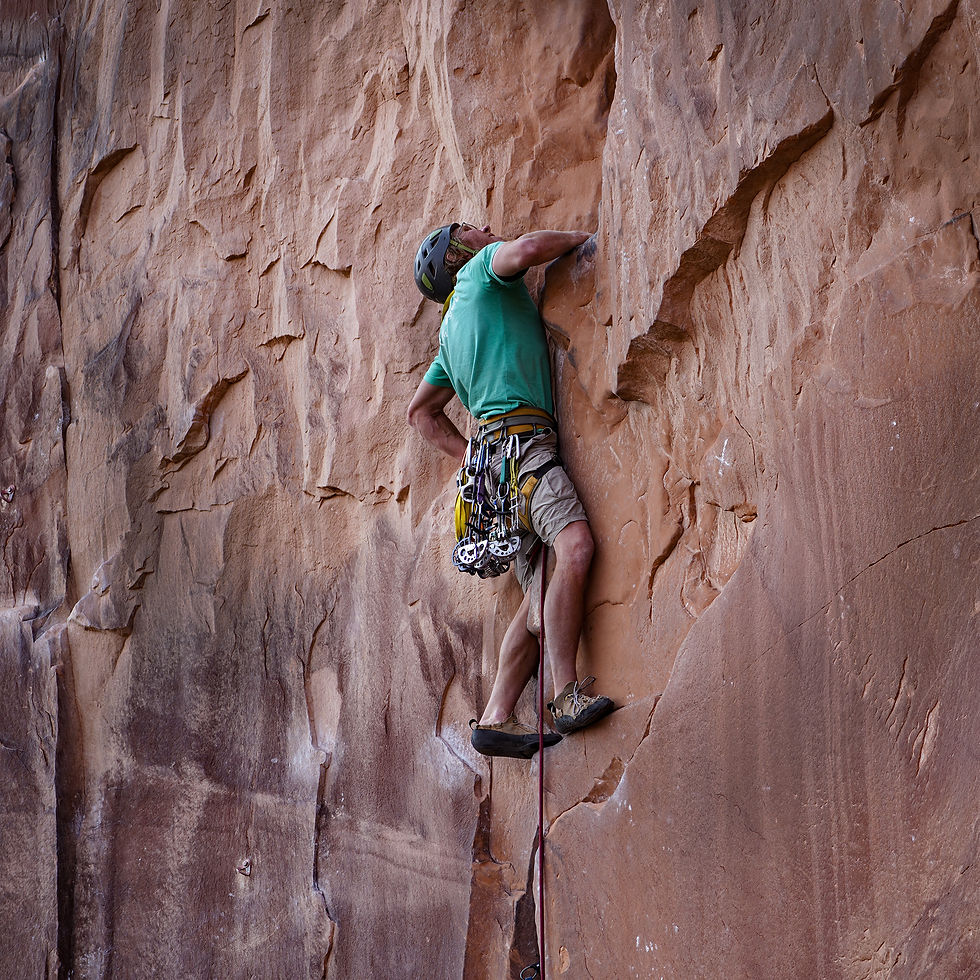
Nuts (10–12 pieces): Passive protection that fits into constrictions. A full set covers most placements.
Cams (6–12 pieces): Active protection for cracks. Start with sizes from about 0.5” to 3”. Add smaller or larger cams later as needed.
Quickdraws or Alpine Draws (10–12): Alpine draws (60–120 cm slings with carabiners) help manage rope drag on wandering routes. Quickdraws are fine for straight lines.
Carabiners: Locking and non‑locking for anchors, belay devices, and gear organization.
Slings & Cord: Useful for building anchors, extending placements, or equalizing protection.
Personal Gear: Harness, helmet, belay device, and shoes—your foundation before any rack.

❌ What You Can Skip (at First)
Oversized cams: Rarely needed unless climbing wide cracks or offwidths.
Triples in finger sizes: Only necessary for specific splitter routes.
Offset nuts or cams: Useful in pin‑scarred areas like Yosemite, but not essential everywhere.
Specialty gear: Hexes, tricams, or micro‑cams can wait until you know your local rock demands them.
⚠️ Risks & Considerations
Weight vs. safety: Carrying too much slows you down, but cutting corners can leave you unprotected.
Local terrain: Desert splitters, alpine granite, or sandstone cracks each favor different gear.
Partner racks: Combine gear with partners to cover more ground without duplicating everything.
Cost: Cams are expensive—build your rack gradually and prioritize versatile sizes first.
Final Pitch
A “nice rack” isn’t about owning every piece of gear—it’s about carrying the right mix for your climbs. Start with a balanced set of nuts, cams, and alpine draws, then expand as your climbing style and terrain demand. Skip the specialty gear until you know it’s essential.
A thoughtful rack keeps you safe, efficient, and ready for adventure.